Shopify Marketing Strategy: 10+ Proven Strategies to Grow Your Store in 2026
Running a successful ecommerce business today requires more than just launching a store. A strong Shopify marketing strategy helps brands attract qualified traffic, increase conversions, retain customers, and stay visible across both traditional search engines and AI-powered platforms like ChatGPT and Google AI Overviews. In 2026, Shopify merchants must combine SEO, paid ads, email automation, social media, content marketing, and AI search optimization to compete effectively. This guide covers the most effective Shopify marketing strategies for stores at every growth stage, from new businesses to established ecommerce brands.
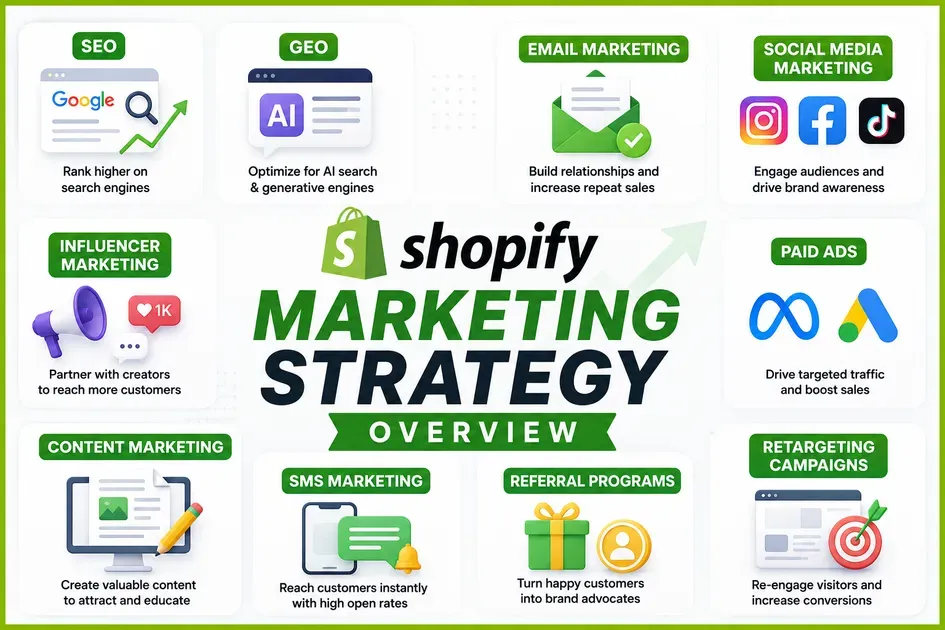
Shopify Marketing Strategy Overview
A Shopify marketing strategy is a plan that helps ecommerce brands attract visitors, convert shoppers into customers, and increase long-term revenue. Instead of relying on one channel alone, successful Shopify stores combine multiple marketing methods to grow consistently and reduce customer acquisition costs.
In 2026, the most effective Shopify marketing strategy focuses on four main goals:
Increase qualified traffic to the store
Improve conversion rates
Generate repeat purchases and customer loyalty
Build stronger brand visibility across search engines and AI platforms
To achieve these goals, Shopify merchants commonly use the following marketing channels:
| Marketing Channel | Main Purpose |
|---|---|
| SEO | Drive long-term organic traffic |
| GEO (AI Search Optimization) | Improve visibility in ChatGPT and AI Overviews |
| Email Marketing | Recover carts and increase repeat sales |
| Social Media Marketing | Build brand awareness and engagement |
| Influencer Marketing | Reach niche and trusted audiences |
| Paid Ads | Generate faster traffic and conversions |
| Content Marketing | Build authority and support SEO |
| SMS Marketing | Promote flash sales and customer retention |
| Referral Programs | Encourage customer-driven growth |
| Retargeting Campaigns | Re-engage visitors who did not purchase |
An omnichannel approach is now essential because customers discover brands through many touchpoints before making a purchase. A shopper may first find a product through TikTok, later read a blog post from Google Search, then return through a retargeting ad or email campaign before finally buying. Brands that create consistent experiences across these channels are more likely to grow sustainably.
10+ Proven Shopify Marketing Strategies
The following 10+ Shopify marketing strategy can help businesses attract more qualified traffic, increase sales, and build a stronger competitive advantage across multiple marketing channels.
SEO for Organic Traffic
Among the most effective Shopify marketing strategy, SEO remains one of the best long-term channels for driving consistent and high-converting traffic. Unlike paid advertising, SEO helps Shopify stores attract customers organically through Google Search and AI-powered search platforms without paying for every click.
Among the most effective Shopify marketing strategies, SEO remains one of the best long-term channels for driving consistent and high-converting traffic. Unlike paid advertising, SEO helps Shopify stores attract customers organically through Google Search and AI-powered search platforms without paying for every click.
Successful Shopify marketing strategy using SEO usually focus on optimizing several key areas of the store:
| SEO Area | Optimization Focus |
|---|---|
| Product Pages | Target transactional keywords, improve product descriptions, optimize images, and add FAQs |
| Collection Pages | Use keyword-focused titles, internal links, and category descriptions |
| Blog Content | Publish educational articles, buying guides, and product comparisons |
| Technical SEO | Improve site speed, mobile usability, and crawlability |
| Internal Linking | Connect products, collections, and blogs to strengthen topical authority |
One of the most important Shopify marketing strategy for SEO is targeting different keyword intents across the customer journey:
Transactional keywords for product and collection pages
Informational keywords for blog content
Comparison keywords for shoppers evaluating products
Long-tail keywords with lower competition and stronger buying intent
Although SEO takes time to build momentum, it remains one of the most scalable Shopify marketing strategies for sustainable ecommerce growth.
GEO (Generative Engine Optimization) for AI Search Visibility
As AI-powered search becomes more popular, GEO (Generative Engine Optimization) is becoming one of the newest and most important Shopify marketing strategy in 2026. Unlike traditional SEO, which focuses on ranking pages in search engines, GEO helps Shopify stores appear in AI-generated answers from platforms like ChatGPT, Gemini, Claude, and Google AI Overviews.
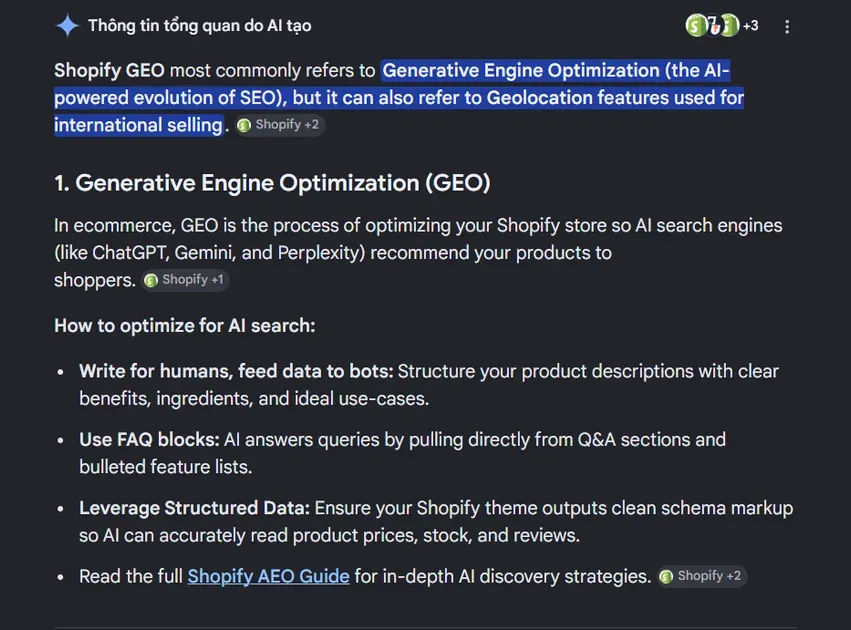
Today, many customers no longer search only through Google links. Instead, they ask AI tools for: Product recommendations, brand comparisons, buying advice, best ecommerce solutions, industry insights. Because of this shift, Shopify brands need content that AI systems can easily understand, trust, and reference.
Effective Shopify marketing strategies for GEO typically focus on the following areas:
Expert-Driven Content: Improve authority and trustworthiness
Structured Data: Help AI systems understand products and pages
FAQ Sections: Increase chances of appearing in AI summaries
Topical Authority: Build expertise around a niche or product category
Brand Mentions & Backlinks: Strengthen brand credibility across the web
Entity-Based SEO: Help AI platforms recognize the brand as a trusted entity
Content structure also matters. AI systems prefer content that is:
Well organized with headings and subheadings
Easy to scan and understand
Factually accurate and trustworthy
Supported by clear explanations and examples
Another important GEO strategy is building consistent brand authority across multiple platforms. Mentions from trusted websites, reviews, social media discussions, and backlinks all help AI systems recognize a Shopify store as a reliable source.
As AI search continues to evolve, GEO will become an increasingly valuable part of Shopify marketing strategy for brands that want stronger visibility beyond traditional Google rankings.
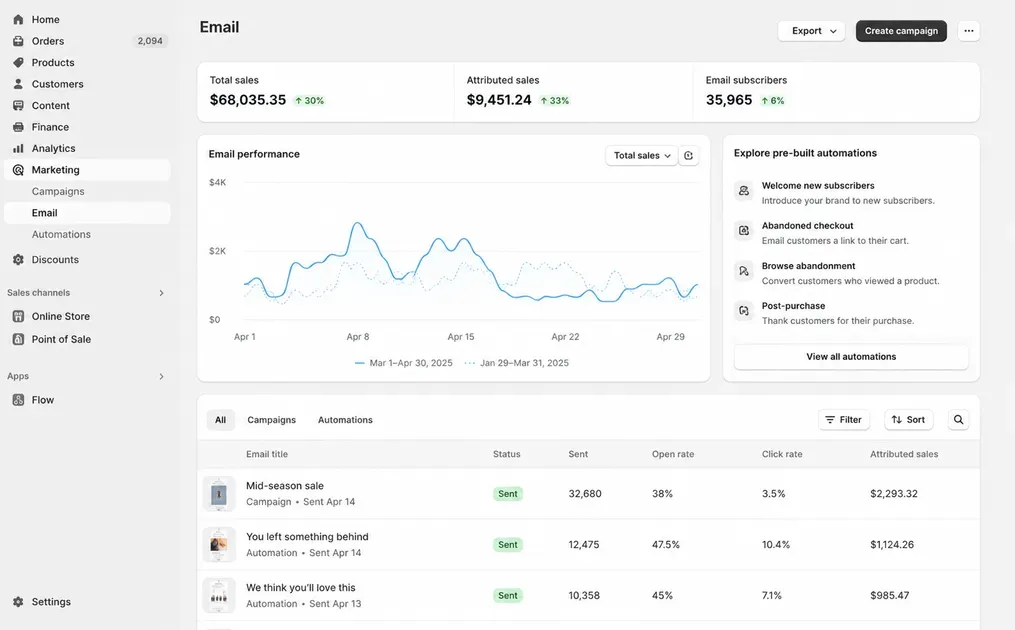
Email Marketing and Automation
Email marketing remains one of the highest-converting Shopify marketing strategies because it helps brands build direct relationships with customers while increasing repeat purchases and customer lifetime value. Unlike social media or paid ads, email gives Shopify stores full ownership of their audience without relying on changing algorithms or rising advertising costs.
The most successful Shopify marketing strategy uses automated email flows to recover lost sales and improve customer engagement.
| Email Automation Flow | Main Purpose |
|---|---|
| Welcome Emails | Introduce the brand and encourage first purchases |
| Abandoned Cart Emails | Recover shoppers who did not complete checkout |
| Post-Purchase Emails | Encourage repeat orders and product reviews |
| Win-Back Campaigns | Re-engage inactive customers |
Segmentation also helps Shopify brands send more personalized campaigns based on customer behavior, purchase history, and interests. In 2026, automation and personalization continue to make email one of the highest-ROI Shopify marketing strategies for e-commerce growth.
Social Media Marketing
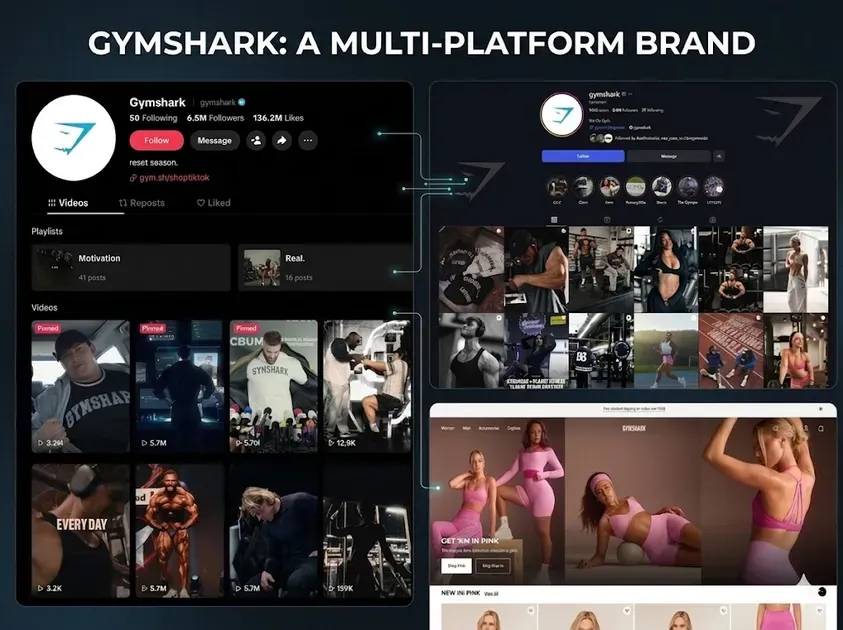
Social media remains one of the most important Shopify marketing strategies for building brand awareness, engaging customers, and driving product discovery. Platforms like TikTok, Instagram, Pinterest, and YouTube Shorts help Shopify stores reach potential buyers through short-form and highly visual content.
Successful Shopify marketing strategy on social media usually focus on a mix of organic content, influencer collaborations, and paid promotions.
| Social Platform | Best Use Case |
|---|---|
| TikTok | Viral product discovery and short-form videos |
| Product showcases and brand storytelling | |
| Lifestyle inspiration and ecommerce traffic | |
| YouTube Shorts | Tutorials, reviews, and product demonstrations |
Many Shopify brands use social media to publish: product demos, behind-the-scenes content, customer testimonials, tutorials and tips, trend-based videos, user-generated content (UGC)
Brands can also make use of social media to encourage product reviews and customer questions, helping build trust and improve engagement. Many Shopify stores use tools like the Doran app to collect reviews, display customer feedback, and boost social proof across marketing channels.
In 2026, authenticity and community engagement continue to play a major role in successful Shopify marketing strategies across social platforms.
Influencer and KOL Campaigns
Influencer and KOL campaigns have become highly effective Shopify marketing strategies for increasing brand awareness, building trust, and driving product sales. Many consumers trust recommendations from creators more than traditional advertisements, especially on platforms like TikTok, Instagram, and YouTube.
Successful Shopify marketing strategy with influencers usually focus on partnering with creators whose audience matches the brand’s target customers.
Nano Influencers: High engagement and niche communities
Micro Influencer: Affordable collaborations and targeted reach
Macro Influencers: Large-scale brand awareness
Industry KOLs: Authority and credibility within a niche
Those videos from influencers can turn into shoppable videos that create a lot of conversions.
Paid Ads (Google and Meta)
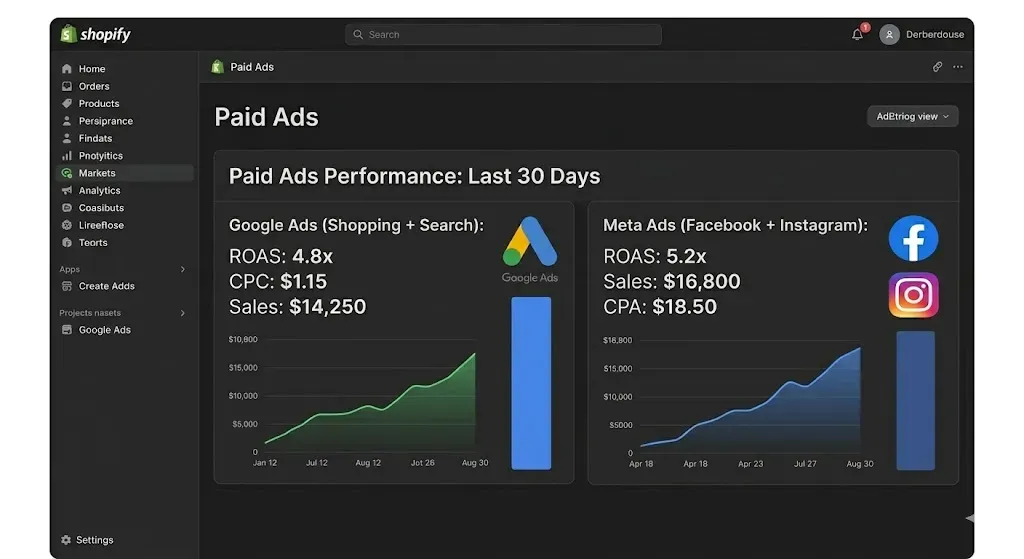
Paid advertising remains one of the fastest Shopify marketing strategies for generating traffic and sales. Google Ads help Shopify stores capture high-intent shoppers actively searching for products, while Meta Ads focus more on product discovery and audience targeting across Facebook and Instagram.
Successful Shopify marketing strategy using paid ads usually combine customer acquisition, retargeting, and creative testing.
Many Shopify brands also use paid ads to:
Promote best-selling products
Launch new collections
Run seasonal campaigns
Increase email signups
Recover abandoned carts
In 2026, successful paid advertising depends heavily on strong creatives, accurate audience targeting, and continuous testing across campaigns.
Content Marketing
Content marketing is one of the most sustainable Shopify marketing strategies for building long-term traffic, authority, and customer trust. Instead of directly promoting products, content marketing helps Shopify stores attract potential buyers through educational and informative content.
Successful Shopify brands often create:
Buying guides
Product comparison articles
Tutorials and how-to content
Trend reports
FAQ articles
Industry insights
Content marketing also supports SEO and GEO strategies by helping Shopify stores rank in search engines and appear in AI-generated search results.
In 2026, brands that consistently publish helpful and authoritative content are more likely to build stronger organic visibility and long-term ecommerce growth.
SMS Marketing
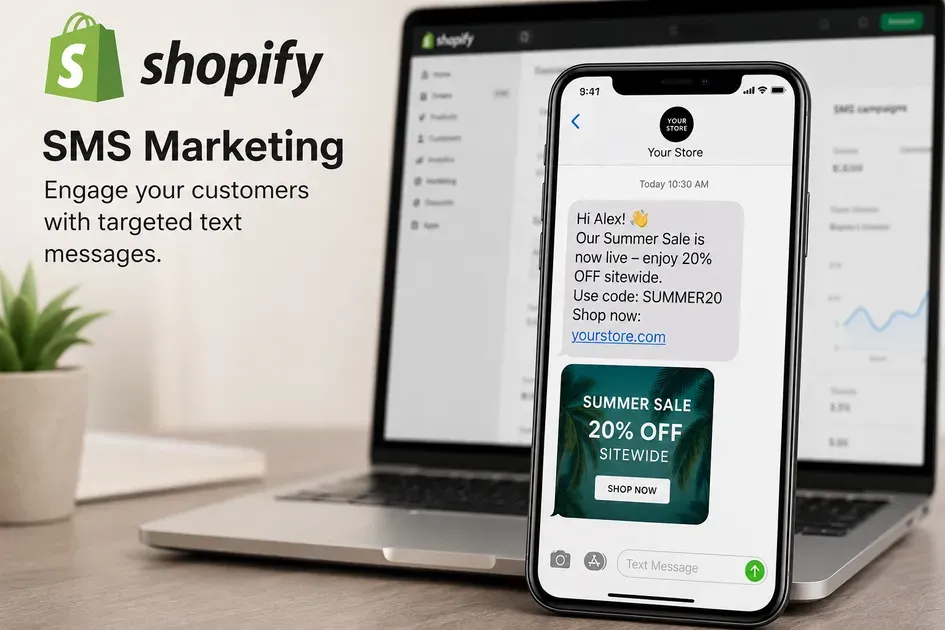
SMS marketing is one of the fastest Shopify marketing strategy for reaching customers and increasing repeat purchases. Because text messages usually have very high open rates, many Shopify brands use SMS campaigns for time-sensitive promotions and customer engagement.
Common SMS marketing use cases include flash sale announcements, abandoned cart reminders, shipping updates, VIP offers and discount codes, and product launch notifications.
In 2026, successful SMS marketing focuses on personalization, timing, and avoiding excessive messaging that may reduce customer trust.
Referral Programs
Referral programs are highly effective Shopify marketing strategies for acquiring new customers through existing buyers. Instead of relying entirely on paid advertising, referral marketing encourages satisfied customers to recommend products to friends and family.
Many Shopify stores offer incentives such as:
| Referral Strategy | Main Benefit |
|---|---|
| Customer Referral Rewards | Encourage word-of-mouth marketing |
| Loyalty Programs | Increase repeat purchases |
| Affiliate Partnerships | Expand brand reach |
| VIP Referral Campaigns | Reward top customers |
Referral marketing not only lowers customer acquisition costs but also helps build trust because recommendations come from real customers rather than traditional ads.
Upselling and Cross-Selling
Upselling and cross-selling are effective Shopify marketing strategy for increasing average order value (AOV) and maximizing revenue from existing customers. Instead of focusing only on acquiring new buyers, these strategies encourage shoppers to purchase additional or higher-value products during the buying process.4
In 2026, personalization and AI-powered recommendations continue to make upselling one of the most profitable Shopify marketing strategies for ecommerce brands.
Retargeting Campaigns
Retargeting campaigns are important Shopify marketing strategies for bringing back visitors who did not complete a purchase during their first visit. Since most shoppers do not buy immediately, retargeting helps brands stay visible and recover lost sales.
Common retargeting strategies include:
Abandoned cart reminders
Dynamic product ads
Limited-time offers
Personalized recommendations
Returning visitor campaigns
In 2026, successful Shopify marketing strategy often combine retargeting with customer segmentation and personalized messaging to improve conversion rates and reduce customer acquisition costs.
Shopify Store Marketing Strategy by Business Stage
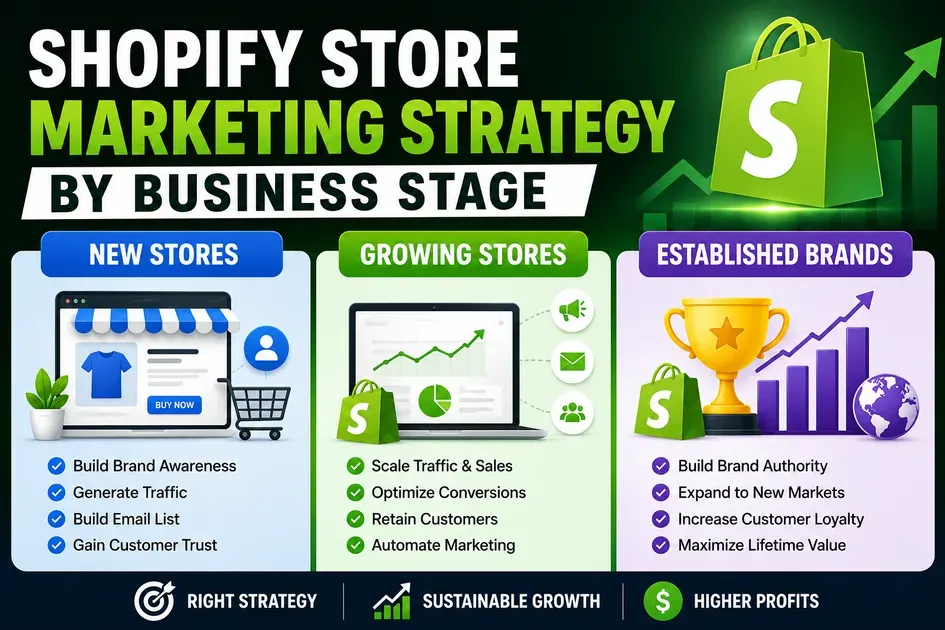
Every stage of a Shopify store's growth requires a distinct marketing approach and budget allocation. Applying the wrong Shopify marketing strategies prematurely can lead to wasted ad spend or strained operations.
New Stores
New Shopify stores should focus on building brand awareness, generating initial traffic, and gaining customer trust. At this stage, low-cost and organic Shopify marketing strategy are often more sustainable than relying heavily on paid ads.
Traffic Generation: SEO and social media marketing
Brand Awareness: Influencer seeding and short-form content
Customer Retention: Email signup and welcome flows
Trust Building: Reviews, testimonials, and UGC
Most new stores focus on validating products, building an audience, and improving conversion rates before scaling aggressively.
Growing Stores
Growing Shopify stores usually shift toward scaling traffic, improving customer retention, and optimizing conversions. At this stage, brands often combine organic and paid Shopify marketing strategies to increase revenue more efficiently.
Customer Acquisition: Google and Meta Ads
Conversion Optimization: Retargeting and upselling
Retention Marketing: Email and SMS automation
Content Growth: SEO and content marketing
Many growing brands also invest more in analytics, automation, and influencer collaborations to expand their reach.
Established Brands
Established ecommerce brands typically focus on long-term scalability, customer loyalty, and omnichannel growth. Their Shopify marketing strategy often combines advanced automation, AI search optimization, and international expansion.
Brand Authority: GEO and content marketing
Customer Loyalty: VIP and referral programs
Revenue Growth: Advanced segmentation and personalization
Expansion: International SEO and multichannel marketing
In 2026, established Shopify brands increasingly invest in AI search visibility, customer experience, and lifecycle marketing to maintain long-term competitive advantages.
Common Shopify Marketing Mistakes to Avoid
Even strong products can struggle if marketing strategies are poorly executed. Many Shopify stores waste budget, lose traffic, or fail to convert customers because of common ecommerce marketing mistakes.
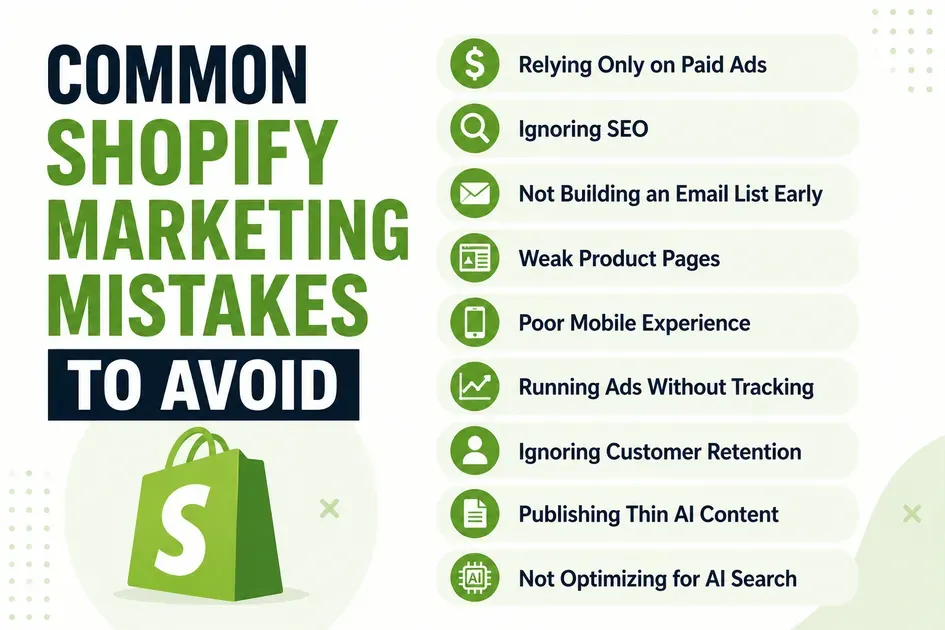
Relying Only on Paid Ads: Creates unstable growth and high acquisition costs.
Ignoring SEO: Misses long-term organic traffic opportunities.
Not Building an Email List Early: Reduces retention and repeat purchases.
Weak Product Pages: Lower conversion rates and customer trust.
Poor Mobile Experience: Increases bounce rates and cart abandonment.
Running Ads Without Tracking: Makes optimization and scaling difficult.
Ignoring Customer Retention: Limits long-term profitability.
Publishing Thin AI Content: Weakens authority and SEO performance.
Not Optimizing for AI Search: Reduces visibility in ChatGPT and AI Overviews.
Many Shopify brands also make the mistake of trying too many marketing channels at once without a clear strategy. Instead of spreading resources too thin, stores often achieve better results by focusing on a few high-performing Shopify marketing strategies and optimizing them consistently over time.
In 2026, successful ecommerce growth depends on balancing traffic acquisition, customer retention, content quality, and AI search visibility.
FAQs
What is the best Shopify marketing strategy?
There is no single best Shopify marketing strategy for every business. Most successful ecommerce brands combine multiple channels such as SEO, email marketing, social media, paid ads, and retention marketing. In 2026, many Shopify stores also invest in GEO (Generative Engine Optimization) to improve visibility in AI-powered search platforms like ChatGPT and Google AI Overviews.
How do I market my Shopify store?
To market a Shopify store effectively, businesses usually start by optimizing their website, improving product pages, and building traffic through SEO, content marketing, and social media. Many brands also use email marketing, influencer collaborations, and paid advertising to increase sales and customer retention.
Which apps help with Shopify marketing?
Popular Shopify marketing apps include:
SEO tools
Email and SMS apps
Review apps
Upsell apps
Referral and loyalty apps
Analytics tools
How do I optimize my Shopify store for AI search?
Use high-quality content, structured data, FAQs, backlinks, and strong SEO practices to improve AI search visibility.
How can my Shopify store appear in ChatGPT and Google AI Overviews?
Focus on GEO by creating trusted content, improving SEO, and building authority through backlinks and brand mentions.
Conclusion
Successful Shopify marketing strategy combines SEO, content marketing, email marketing, paid ads, and customer retention strategies. In 2026, brands should also optimize for AI search platforms like ChatGPT and Google AI Overviews to improve visibility and long-term growth.

Hey! I'm Linda Bui. Join me as we explore tips and tutorials about Shopify apps and Shopify themes for your Shopify store.
Start Building Trust Today
Install the Product Reviews app to improve your store's credibility and boost sales with real customer reviews.
Get Started with Zero CostWhat to not miss out on our blog
Gain insightful knowledge and invaluable experiences from dedicated experts.
_1200x630.webp)
What Is Shopify Collabs? How It Works and How Brands Use It in 2026
Discover what is Shopify Collabs, how it automates affiliate tracking, and how to use it to scale influencer marketing from your dashboard. Read right now!
_1200x630.webp)
_1200x630.webp)
Newsletter
Get all the stories you need-to-know from the most powerful name in news delivered first thing every morning to your inbox