Shopify vs Salesforce: Which Platform Fits Your Business Best?
- Shopify vs Salesforce Overview
- Shopify vs Salesforce: Cost and Pricing
- Shopify vs Salesforce: Key Platform Differences
- Shopify vs Salesforce: Pros & Cons
- Use Case Scenarios: When to Choose Shopify vs Salesforce?
- Shopify vs Salesforce: Which Is the Right Platform for Your Business?
- FAQs about Shopify vs Salesforce
- The Bottom Line
Shopify vs Salesforce: Which platform truly fits different business goals in a fast-changing digital market? Both names dominate conversations around e-commerce and customer management, yet they serve very different purposes. Shopify focuses on streamlined online selling, while Salesforce delivers powerful tools for CRM, automation, and data-driven growth. Choosing between them can shape scalability, costs, and long-term strategy. Explore how Shopify vs Salesforce compare across features, then decide which solution aligns best with business ambitions!
Shopify vs Salesforce Overview
What is Shopify?
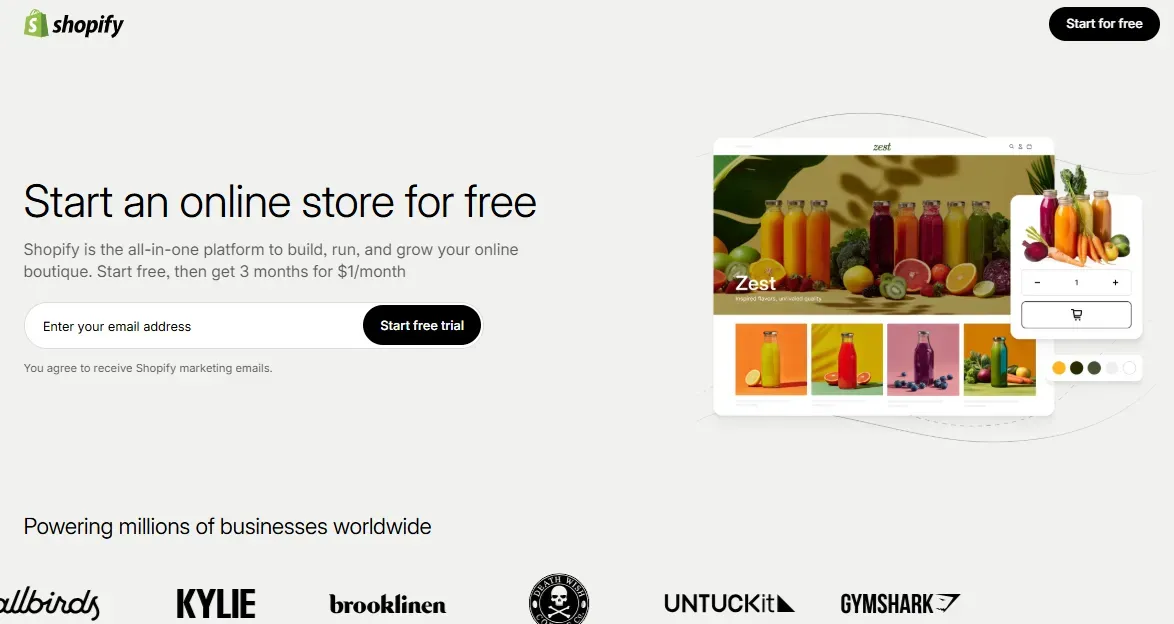
Shopify is a cloud-based eCommerce platform built to help businesses sell products online, in-store, and across social channels. It started in 2006 and has grown to support millions of merchants globally with tools to launch and run an online store quickly. Shopify’s interface is easy to use, even for those without technical skills, and includes built-in features for product listings, checkout, and payment processing.
This platform scales from small startups to large retailers with Shopify Plus for enterprise needs. It also supports hundreds of integrations through the Shopify App Store, allowing businesses to add marketing, inventory, CRM, and logistics tools as needed. Many sellers choose Shopify for its speed, simplicity, and broad ecosystem of apps.
Here are the key features of Shopify:
Ready-to-use online store and checkout system
Multiple sales channels (web, social, marketplaces)
App marketplace for extensions and add-ons
Built-in payment and shipping tools
What is Salesforce?
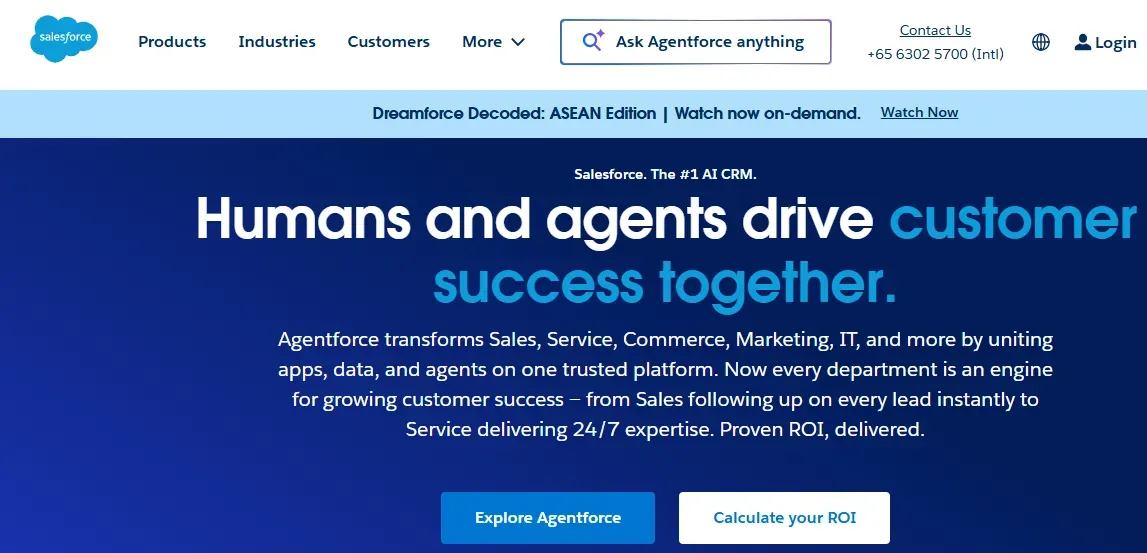
Salesforce is a U.S.-based software company known for its customer relationship management (CRM) platform. It offers cloud-based software for sales, service, marketing, analytics, and commerce operations. Salesforce’s tools help teams manage contacts, leads, and customer interactions in one unified system.
The company also provides Salesforce Commerce Cloud, a solution for enterprise online selling that integrates with the broader Salesforce ecosystem. This helps large brands unify customer data and personalize experiences across marketing, sales, and support. Salesforce is widely used by corporations that need deep CRM and data management capabilities.
The main features of Salesforce include:
Enterprise CRM with contact and lead tracking
Marketing automation and analytics tools
Commerce Cloud for scalable online selling
Integration with service and support platforms
Shopify vs Salesforce: Cost and Pricing
How are Shopify vs Salesforce different in terms of pricing? Shopify uses clear monthly plans. Salesforce pricing varies widely by product, user count, and sales volume. Here’s a quick look at how Shopify and Salesforce compare on cost and pricing:
| Shopify Pricing | Salesforce Pricing |
|---|---|
| Starter: $5/mo | Free Suite: $0/2users/mo |
| Basic: $25/mo | Starter Suite: $25/user/mo |
| Grow: $65/mo | Pro Suite: $100/user/mo |
| Advanced: $399/mo | Enterprise: $175/user/mo |
| Shopify Plus: ~$2,300+/mo | Unlimited: $350/user/mo |
| Agentforce 1 Sales: $550/user/mo |
Shopify
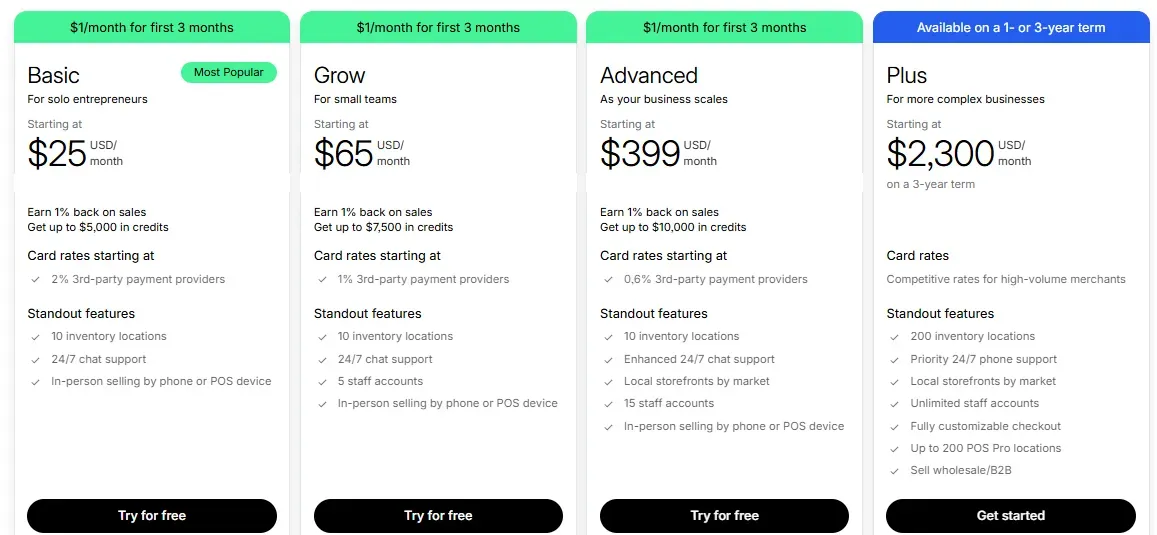
Shopify pricing is clear and predictable. Plans start with Starter at $5 per month and scale up to Advanced at $399 per month. Higher tiers include lower transaction fees and advanced tools for reporting and staff accounts. Shopify Plus serves large brands with custom pricing that often starts around $2,300 per month.
Transaction fees apply if third-party payment processors are used. Apps and themes can add extra monthly costs. Still, the monthly billing model helps businesses plan expenses.
Salesforce
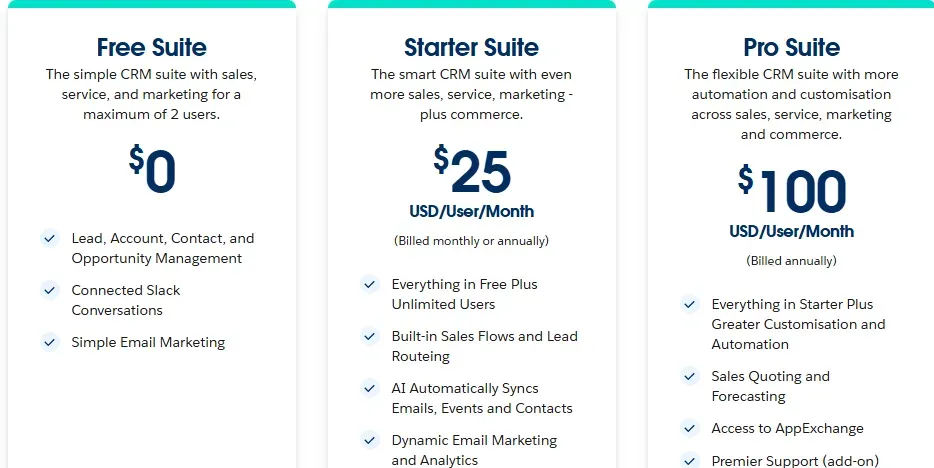
Salesforce pricing is flexible but complex. CRM and Commerce plans often start at $0 to $350 per user per month. Larger Commerce Cloud packages use a percentage of gross sales volume and require negotiated contracts.
Costs can grow with user count and platform add-ons. Enterprise features, analytics, AI, and custom integrations often raise the total price significantly. This makes Salesforce a strong choice for large operations with deep budgets.
Shopify vs Salesforce: Key Platform Differences
If choosing between Salesforce vs Shopify feels complex, the key platform differences below make your decision clearer:
| Shopify | Salesforce | |
|---|---|---|
| Ease of Use |
Simple interface Fast setup No technical skills required. |
Steep learning curve Often needs IT or developers |
| Sales Features | Built-in eCommerce tools and omnichannel selling | Advanced B2B sales tools and CRM-driven workflows |
| Data & Analytics | Clear dashboards for core sales and customer data | Deep analytics across CRM, marketing, and commerce |
| Customer Experience & Checkout | Fast, mobile-friendly checkout built for conversions | Personalized journeys powered by CRM data |
| Integration Capabilities | 8,000+ apps and easy third-party integrations | Native integration across Salesforce clouds |
| Customization & Scalability | Easy customization with themes and apps | Enterprise-level customization and scalability |
| Themes & Designs | 100+ ready-made themes with visual editors | Custom storefronts built by developers |
| Support | 24/7 chat, email, and phone support | Enterprise support with SLAs and premium plans |
| Security | PCI DSS Level 1, SSL, and built-in fraud protection | Advanced enterprise security and compliance controls |
Ease of Use
Shopify
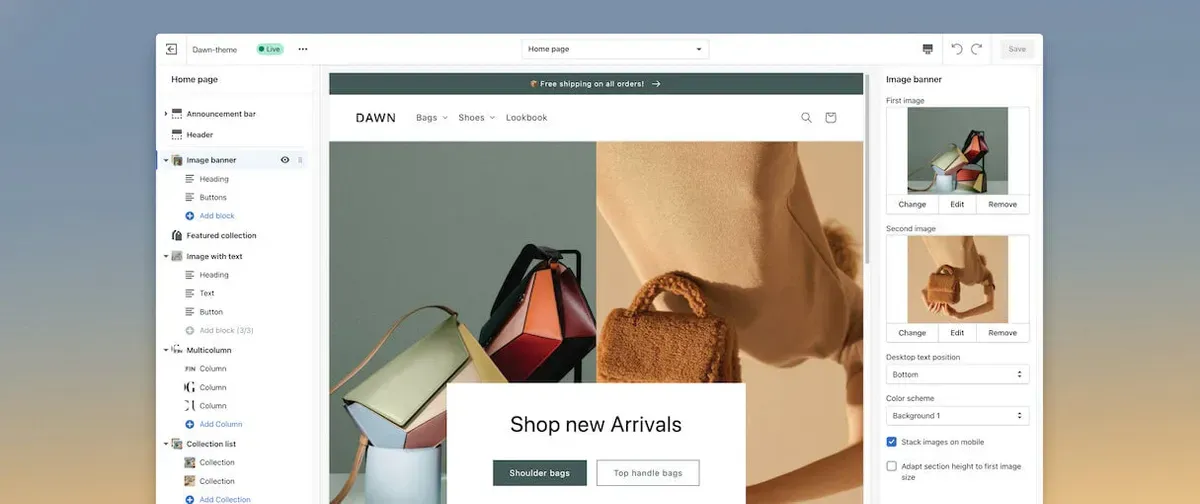
Shopify is known for its simple, intuitive interface that helps non-technical users set up and manage online stores easily. Store creation, product listing, and basic settings can be handled in days without deep coding knowledge. The dashboard is clear, easy to navigate, and designed with merchants in mind.
Salesforce
Salesforce, especially Commerce Cloud, offers deep enterprise power but with a steeper learning curve. It often requires technical specialists or developers for setup and advanced customization. The interface includes more complex tools and dashboards aimed at teams with IT support.
Final verdict:
In this Shopify vs Salesforce comparison, Shopify is better for businesses seeking an easy, fast setup. Salesforce suits larger teams with technical resources and enterprise needs.
Sales Features
Shopify
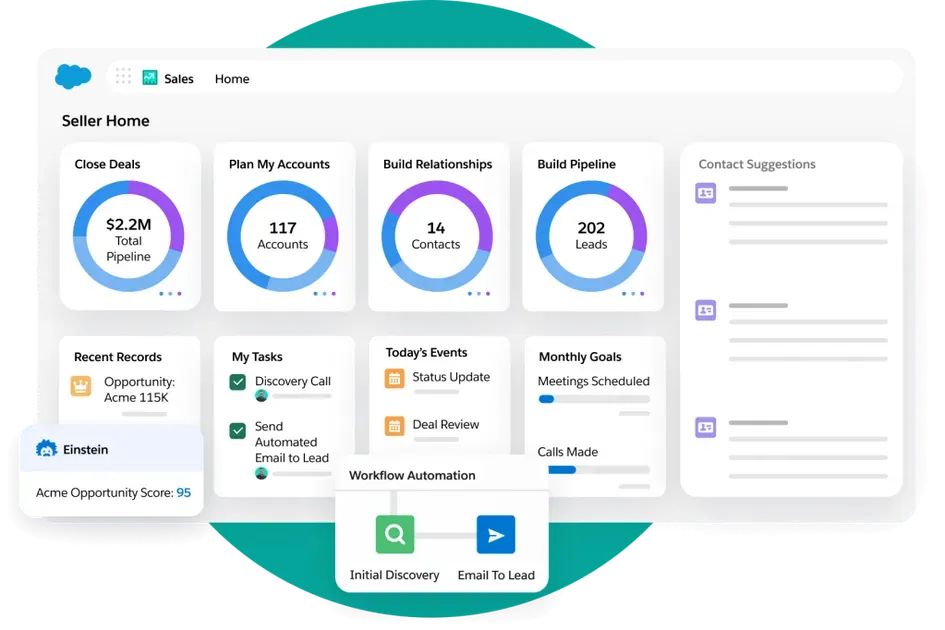
Shopify builds essential e-commerce sales tools right into its plans. These include product catalogs, discount codes, automated abandoned cart emails, and integrated checkout options. Shopify also makes omnichannel selling easy across the web, social media, and in-person POS channels.
Salesforce
Salesforce Commerce Cloud provides advanced sales tools tailored for high-volume and B2B operations. It includes AI-driven personalization, dynamic catalogs, quote and contract pricing tools, and deep CRM-linked features. These tools support complex sales models and multi-brand operations.
Final verdict:
In this side-by-side look at Shopify vs Salesforce, Shopify meets the needs of most online and small-to-mid-sized sellers with built-in sales tools. Salesforce excels for enterprises that need custom sales flows and deep CRM integration.
Data and Analytics
Shopify
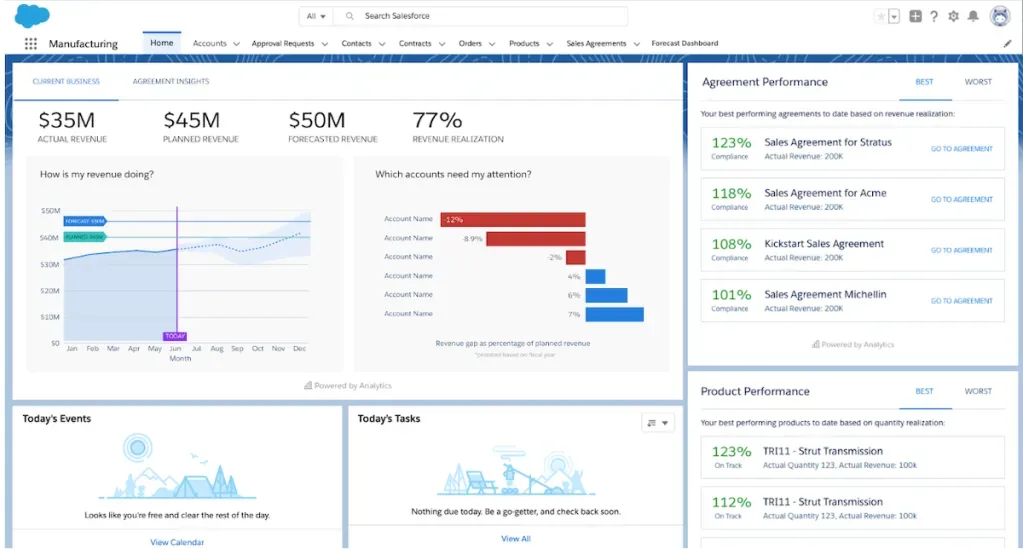
Shopify offers built-in analytics to track sales, traffic, and customer behavior. Dashboards are designed to be easy to read, providing clear business insights without extra setup. Reports cover performance by product, channel, and campaign.
Salesforce
Salesforce’s analytics are part of a broader data ecosystem. Commerce Cloud integrates with CRM and marketing clouds to deliver unified customer profiles and deep insights across touchpoints. These tools support segmentation, forecasting, and AI-driven decision support.
Final verdict:
For this Shopify vs Salesforce comparison round, Salesforce offers deeper, enterprise-grade analytics. Shopify’s reporting is strong for core eCommerce metrics but less extensive than Salesforce’s unified data views.
Customer Experience & Checkout
Shopify
Shopify’s checkout process is optimized for speed and conversion. It includes mobile-friendly experiences, digital wallets, and accelerated checkout options. Shopify merchants often report strong performance in conversion rates thanks to this streamlined experience.
Salesforce
Salesforce Commerce Cloud supports customized customer journeys across channels. It uses tools like AI-driven recommendations and personalized shopping flows tied to CRM data. These features help large brands deliver tailored experiences, but setup is more complex.
Final verdict:
In this analysis of Shopify vs Salesforce, Shopify’s checkout is fast, familiar, and designed to boost conversions quickly. Salesforce builds more personalized and flexible experiences for brands with larger catalogs and diverse audiences.
Integration Capabilities
Shopify
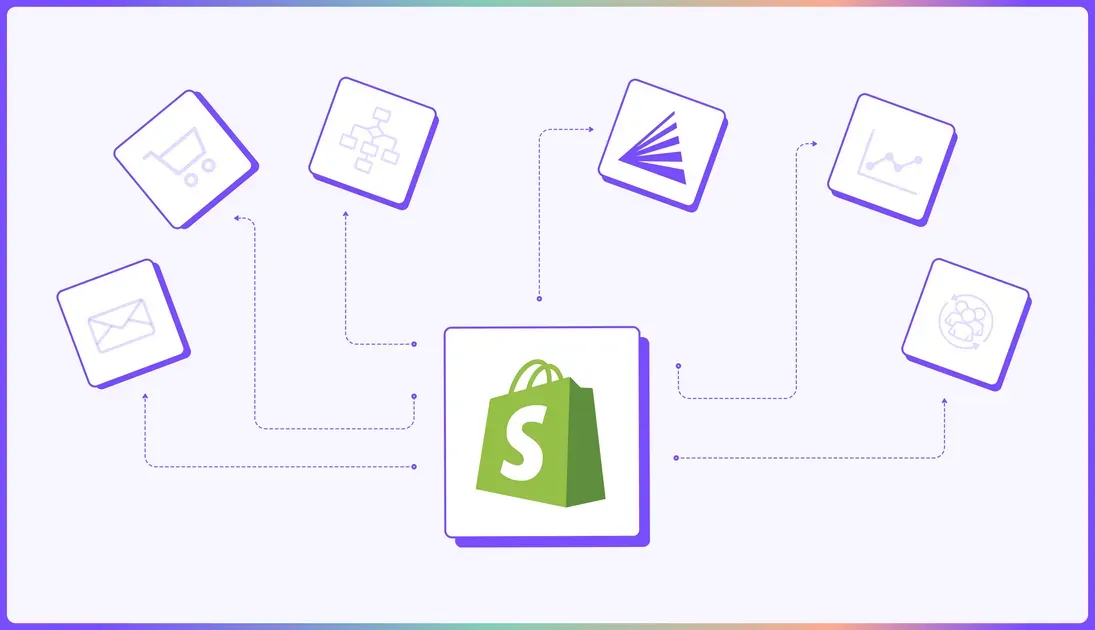
Shopify has a large integration ecosystem with over 8,000 apps available in its App Store. These apps cover marketing, inventory, customer service, analytics, and more, allowing merchants to extend functions quickly without heavy development work. Shopify’s APIs and webhooks also support custom development and connections to CRM or ERP systems when needed.
Third-party apps can sync Shopify with systems like Salesforce CRM, enabling unified customer data and orders across both platforms. These connectors help bridge Shopify’s e-commerce focus with powerful CRM workflows.
Salesforce
Salesforce offers native integration with its own CRM, service, and marketing clouds that unifies customer data across business systems. This deep integration streamlines operations and provides a true 360-degree view of customers across sales, support, and commerce.
Salesforce’s APIs also support custom integrations with external systems, but they often require more development effort and technical expertise to implement.
Final verdict:
In this side-by-side look at Shopify vs Salesforce, Shopify excels at plug-and-play third-party integrations for e-commerce needs. Salesforce leads in deep, enterprise-level integration, especially across CRM and business systems.
Customization and Scalability

Shopify
Shopify provides customization through editable themes, drag-and-drop editors, and apps. Merchants can tailor shop appearance and basic business logic without code. For custom backend needs, developers use APIs, webhooks, or build apps. Shopify Plus supports growth and scalability for high-volume stores but stays focused on simpler commerce tasks compared to enterprise architecture.
Salesforce
Salesforce Commerce Cloud offers deeper customization with full backend logic, unlimited API calls, and richer developer tools. This makes it ideal for brands with complex catalogs or multi-brand operations. Customization on Salesforce often requires specialist developers and longer implementation cycles. Still, the payoff is a tailored platform that can serve global enterprises.
Final verdict:
In this Shopify vs Salesforce comparison, Shopify provides easy customization for most business needs. Salesforce offers true enterprise-grade flexibility for complex, custom commerce requirements.
Themes & Designs
Shopify
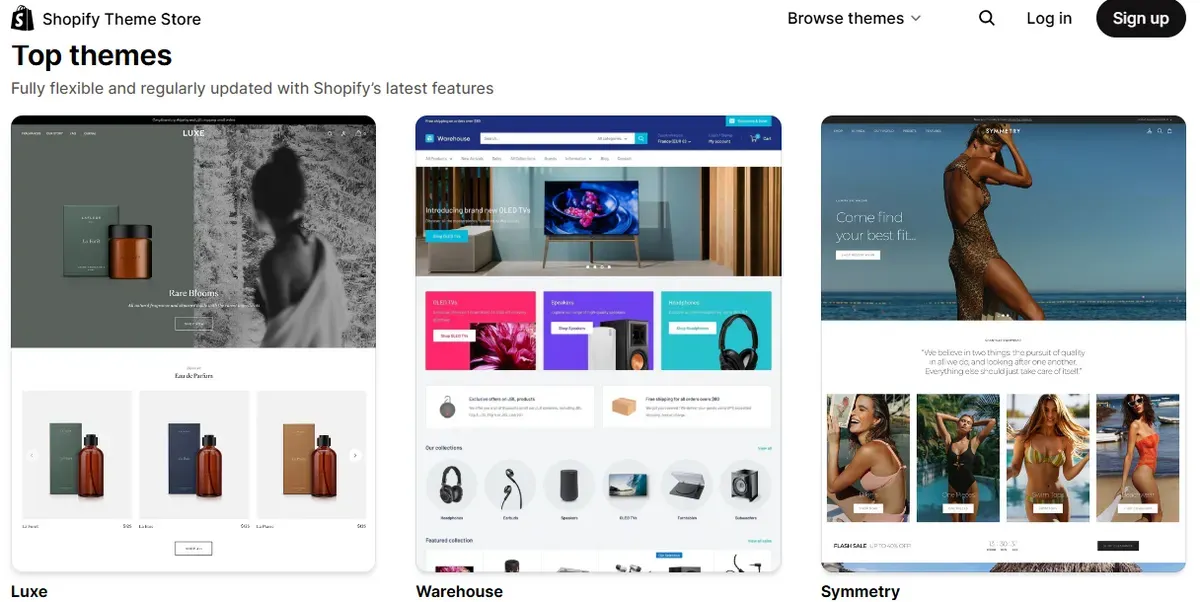
Shopify provides 100+ professional themes, both free and paid, designed for quick setup and visual appeal. These themes are mobile-ready and customizable using the theme editor without needing technical skills. Store owners can adjust fonts, colors, layouts, and sections to fit brand identity. This makes Shopify ideal for sellers seeking strong aesthetics quickly.
Salesforce
Salesforce Commerce Cloud does not offer a large library of ready-made themes. Custom storefront design often requires developers or agencies to build from scratch. The platform can deliver unique, branded experiences, but achieving them takes more time and technical work.
Final verdict:
In this head-to-head comparison of Shopify vs Salesforce, Shopify wins for ease and speed of design with professional themes. Salesforce suits brands with design teams and custom experience goals.
Support

Shopify
Shopify provides 24/7 support through email, live chat, and phone. Comprehensive online guides, forums, and community groups help merchants find answers fast. Shopify Plus customers benefit from dedicated account managers and priority support. This level of support makes Shopify accessible for small and medium sellers who need timely help.
Salesforce
Salesforce offers enterprise-level support with Service Level Agreements (SLAs), account managers, and developer assistance. Standard response times can be longer, but premium support options speed issue resolution. Documentation is extensive but can be dense, meaning merchants may need time to find answers on their own.
Final verdict:
Shopify shines with accessible, round-the-clock support, especially for non-technical users. Salesforce delivers powerful support for large enterprises but often at a higher cost.
Security
Shopify
Shopify includes PCI DSS Level 1 compliance, SSL security, and fraud protection as standard features. It automatically manages updates and security patches to keep stores safe. Compliance with GDPR and CCPA is supported, and built-in encryption protects customer data. This strong security foundation works well for consumer-facing businesses and accepts payments securely through Shopify Payments and other gateways.
Salesforce
Salesforce Commerce Cloud offers enterprise security controls, including encryption, role-based permissions, audit trails, and compliance frameworks like HIPAA and ISO standards. These options suit businesses with advanced security policies and regulatory needs. Maintaining these configurations can require technical involvement, but the depth of controls matches enterprise expectations.
Final verdict:
Throughout this Shopify vs Salesforce comparison, Shopify delivers robust e-commerce security with automatic management and strong compliance. Salesforce offers deeper control for complex enterprise environments, though it demands more configuration effort.
Shopify vs Salesforce: Pros & Cons
Shopify
Pros:
Easy-to-use interface that simplifies store setup and daily tasks.
Large app ecosystem with many integrations to extend store functionality.
Affordable pricing plans for small and medium online stores.
Reliable security and secure hosting included.
Cons:
Customization can be limited to complex or unique business needs.
Lower plans include transaction fees that can cut into profit.
Some advanced features need paid apps or developer support.
Salesforce
Pros:
Deep integration with Salesforce CRM and marketing tools.
Highly customizable and scalable for enterprise operations.
Strong analytics and personalization features.
Designed to support large catalogs and global operations.
Cons:
Higher total cost and complex pricing models.
Steeper learning curve that may require technical expertise.
Implementation and maintenance often demand specialized support.
Use Case Scenarios: When to Choose Shopify vs Salesforce?
For direct-to-consumer brands, small shops, and mid-sized online stores that need quick setup, clear pricing, and strong conversion tools, Shopify is often the better choice. The platform supports fast launches and simple management without heavy developer work, especially for merchants focused on B2C sales and rapid growth.
Large enterprises, global retailers, and businesses with complex sales processes tend to choose Salesforce Commerce Cloud when deep CRM integration and extensive customization are required. This platform excels at unifying data across sales, service, and marketing for omnichannel operations.
In cases where a company needs both systems, Shopify can handle storefront operations while Salesforce manages customer relationships and service data. This split approach helps combine ease of e-commerce with powerful CRM workflows.
Shopify vs Salesforce: Which Is the Right Platform for Your Business?
You should choose Shopify if you want a fast launch, simple tools, and clear pricing. The platform helps you sell online, manage products, and accept payments without heavy technical work. Shopify fits small to mid-size stores and growing direct-to-consumer brands that value speed and ease of use.
You may prefer Salesforce if your business needs deep CRM data, complex sales flows, and advanced personalization. The platform supports large teams, global operations, and custom commerce setups tied to sales and service data. Salesforce works best when you manage high volume and complex customer journeys.
FAQs about Shopify vs Salesforce
Can Shopify and Salesforce be integrated together?
Yes. Shopify can connect with Salesforce CRM or Commerce Cloud using connectors or third-party apps to sync data like customers, orders, and products. Some setups use API tools or middleware to keep systems in sync.
Which platform is better for small businesses?
Shopify is often better for small businesses because it’s easy to set up and manage without heavy technical work. Salesforce can work for small businesses, but it often needs more investment and expertise.
Is Salesforce better for CRM than Shopify?
Yes. Salesforce is built as a full CRM platform with advanced customer data tracking and sales tools. Shopify’s CRM features are more basic and aimed at e-commerce stores.
Do I need developers to set up Salesforce?
Often, yes. Salesforce Commerce Cloud and deep CRM setups usually need technical skills or developers to configure custom workflows and integrations.
Is Salesforce better than Shopify for large businesses?
For large enterprises with complex operations and CRM needs, Salesforce can offer deeper integration and customization. Shopify also scales well, but Salesforce’s ecosystem suits more intricate business structures.
The Bottom Line
Choosing between Shopify and Salesforce depends on business size, goals, and technical needs. Shopify delivers speed, simplicity, and strong eCommerce tools, while Salesforce offers deep CRM power and enterprise control. The Shopify vs Salesforce comparison shows clear strengths on both sides. Every platform decision shapes growth, cost, and customer experience. Review priorities carefully, compare features that matter most, and take the next step toward a smarter platform choice today.

Hey! I'm Linda Bui. Join me as we explore tips and tutorials about Shopify apps and Shopify themes for your Shopify store.
Start Building Trust Today
Install the Product Reviews app to improve your store's credibility and boost sales with real customer reviews.
Get Started with Zero CostWhat to not miss out on our blog
Gain insightful knowledge and invaluable experiences from dedicated experts.
_1200x630.webp)
What Is Shopify Collabs? How It Works and How Brands Use It in 2026
Discover what is Shopify Collabs, how it automates affiliate tracking, and how to use it to scale influencer marketing from your dashboard. Read right now!
_1200x630.webp)
_1200x630.webp)
Newsletter
Get all the stories you need-to-know from the most powerful name in news delivered first thing every morning to your inbox